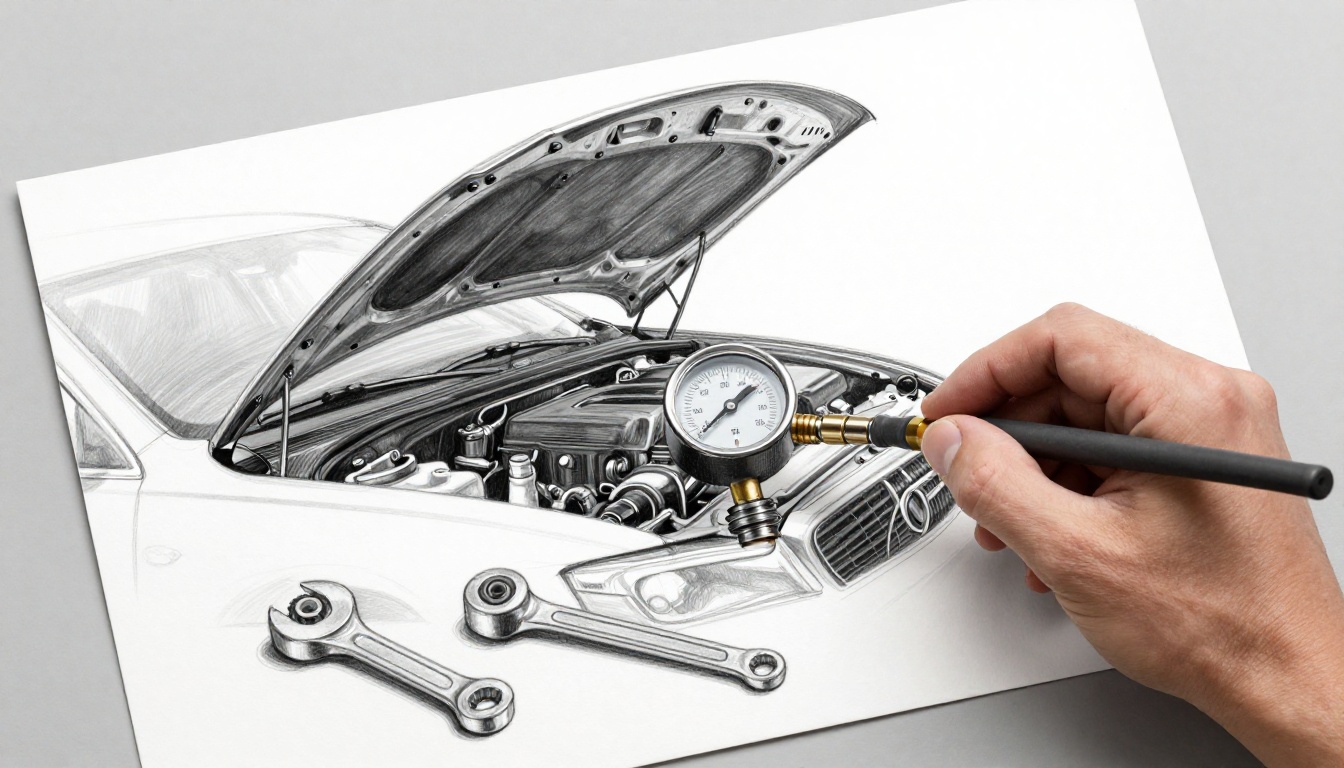
Picture this. You crank your car one morning, and it sputters like an old lawnmower. Smoke puffs from the tailpipe. Power feels weak on the highway. These signs scream engine trouble, but a mechanic quotes thousands for repairs you never saw coming.
Engine compression measures pressure in the cylinders during the power stroke. Healthy pressure means good combustion and smooth performance. Low numbers point to worn piston rings, bad valves, or a blown head gasket. You catch issues early and save cash.
This test uses a basic pressure gauge. No shop needed. You do it in your driveway. We’ll cover tools, safety, steps, results, and fixes. Grab a coffee. Let’s get your engine checked.
Why Engine Compression Testing Reveals Hidden Car Problems
Your engine acts like lungs. Cylinders fill with air and fuel, then compress for a bang of power. Weak compression starves that process. Symptoms hide until they worsen.
Rough idle tops the list. The engine shakes at stops. You feel vibrations through the seat. Low power hits next. Hills drain speed fast. Excessive smoke from the exhaust signals burning oil. Hard starts mean multiple key turns. High oil use empties the dipstick quick.
Poor compression causes all this. Worn rings let pressure escape past pistons. Valves fail to seal tight. Gaskets blow from heat stress. No check engine light always warns. You need this test for clues.
Think of it as a doctor’s exam for your motor. A quick check spots cancer before it spreads. For example, piston rings worn thin cut power by 20 to 30 percent. Drivers blame fuel. Compression reveals truth.
Used car buyers love this test. Sellers patch issues. You verify health before cash changes hands. It beats surprise breakdowns.
Common signs include:
- Rough idle or misfires
- Loss of acceleration
- Blue or white exhaust smoke
- Trouble starting cold
- Oil consumption over a quart per 1,000 miles
Test now if you spot two or more. Early detection prevents total failure. Compression testing uncovers what scanners miss.
Gather These Must-Have Tools and Prep Your Workspace
Start with the right gear. A compression gauge kit costs under $50. Pick a screw-in type rated 0 to 300 PSI. It threads into spark plug holes for a firm seal. Avoid clip-on models. They leak on big engines.
You’ll need a ratchet set with extensions. A spark plug socket fits most jobs. Grab gloves, rags, and paper for notes. Eye protection stays essential.
Prep your spot. Choose a flat driveway. Good light helps readings. Park the vehicle level. Chock wheels front and rear. Connect a battery charger if voltage dips low.
For gas engines, steps stay simple. Diesels need higher PSI gauges. Check your manual first.
Safety gear matters most. Loose clothes snag fans. Hot parts burn skin.
Here’s what to collect:
- Compression gauge (screw-in, 300 PSI max)
- 3/8-inch drive ratchet and extensions
- Spark plug socket (usually 5/8 or 13/16 inch)
- Gloves, safety glasses, rags
- Notebook and pen
Wipe surfaces clean. Clear clutter. You work safer and faster. Total setup takes 10 minutes.
Master the Safety Steps Before Turning the Key
Safety prevents disasters. Fires start from fuel spray. Shocks come from live wires. Follow rules every time.
Disconnect the battery negative cable first. No power means no spark. Pull the fuel pump fuse or relay next. Locate it in the manual or fuse box. Engine cranks dry now.
Disable ignition. Ground coil wires or unplug the module. Let the engine cool if hot. Burns hurt bad.
Wear gloves and glasses. Crank speeds snap loose tools. Check cylinder order in your manual. Number one sits front usually.
Test a warm engine for true reads. Idle it to operating temp first.
Warm Up and Disable Systems Properly
Run the engine 10 minutes. Gauges show real compression hot. Valves seat better.
Find fuses under the hood or dash. Diagrams label fuel pump clear. Verify no fuel pressure. Crank once. Listen for pump whine gone.
Ground plug wires to a bolt. Test light confirms no spark. Double-check battery loose.
These steps take five minutes. They protect you and the car.
Follow This Easy Step-by-Step Guide to Take Readings
Now the fun part. Remove all spark plugs first. Even crank speed builds max pressure. Note cylinder order. Front to back usually 1-2-3-4.
Screw the gauge into hole one. Hand tight then quarter turn with ratchet. No leaks matter.
Hold throttle wide open. Foot to floor. Crank four to five seconds. Watch needle climb then peak. Note max PSI. Release valve quick. Move to next cylinder.
Repeat for all. Wiggle gauge between tests for seal. Compare numbers right away.
Pro tips help. Thread lube fights rust. Pencil labels cylinders.
Remove Spark Plugs and Install the Gauge Right
Pull plugs with socket and extension. Inspect each. Oil fouling means rings leak. Gap them if reuse later.
Blow debris from holes. Compressed air works best. Thread gauge snug. O-ring seals tight.
Crank the Engine and Capture Peak Pressure
Full throttle opens valves full. Crank steady. Needle rises fast then holds. Record peak. Four seconds max per try.
Battery strong cranks faster. Helper watches gauge if needed.
Test Every Cylinder the Same Way
Label 1 through 8. Front bank first on V engines. Note each PSI. Variance over 10 percent flags trouble. Retest low ones.
Finish in 30 minutes. Clean plugs for reinstall.
Decode Your Results: Good Numbers vs Red Flags
Healthy engines hit 120 to 180 PSI per cylinder. Minimum stays above 100 PSI. All cylinders even within 10 percent. Check your manual for exact specs.
Low across all means rings or pistons wear. One low cylinder points to valve issues. Big drops between adjacent suggest gasket failure.
Run numbers like this. Highest PSI minus lowest divided by highest times 100. Under 10 percent passes.
| Engine Type | Good PSI Range | Max Variance | Common Low Cause |
|---|---|---|---|
| 4-Cylinder Gas | 140-170 | 10% | Worn rings |
| V6 Gas | 130-160 | 10% | Burned valve |
| V8 Gas | 120-150 | 15% | Head gasket |
Overall low needs rebuild. Even numbers mean healthy seals.
Spot Uneven Readings and What They Mean
Calculate percent diff quick. Adjacent lows scream gasket. Opposite sides point to rods bent.
One low stays valve or plug seat. Retest confirms.
Run a Wet Test for Leaky Rings
Add two teaspoons oil to low cylinder. Recrank. PSI rises 20 or more means rings leak. No rise points to valves or head.
Wet test pinpoints fixes.
Fix Low Compression or Know When to Get Help
Start simple. Replace bad plugs or wires. Adjust valves if lash loose.
Rings need hone and new set. Rare DIY. Head gasket demands pro torque.
Costs run $500 for valves to $3,000 full rebuild. Oil changes prevent most wear. Avoid revving cold.
Call help if variance tops 20 percent. Or smoke pours with oil loss.
Test yearly on high-mile cars. You save thousands.
Regular checks keep engines alive.
Engine compression testing empowers you. Spot trouble before it strands you. Follow these steps this weekend. Note your PSI in comments below. What surprised you most? Grab that gauge today. Drive confident.