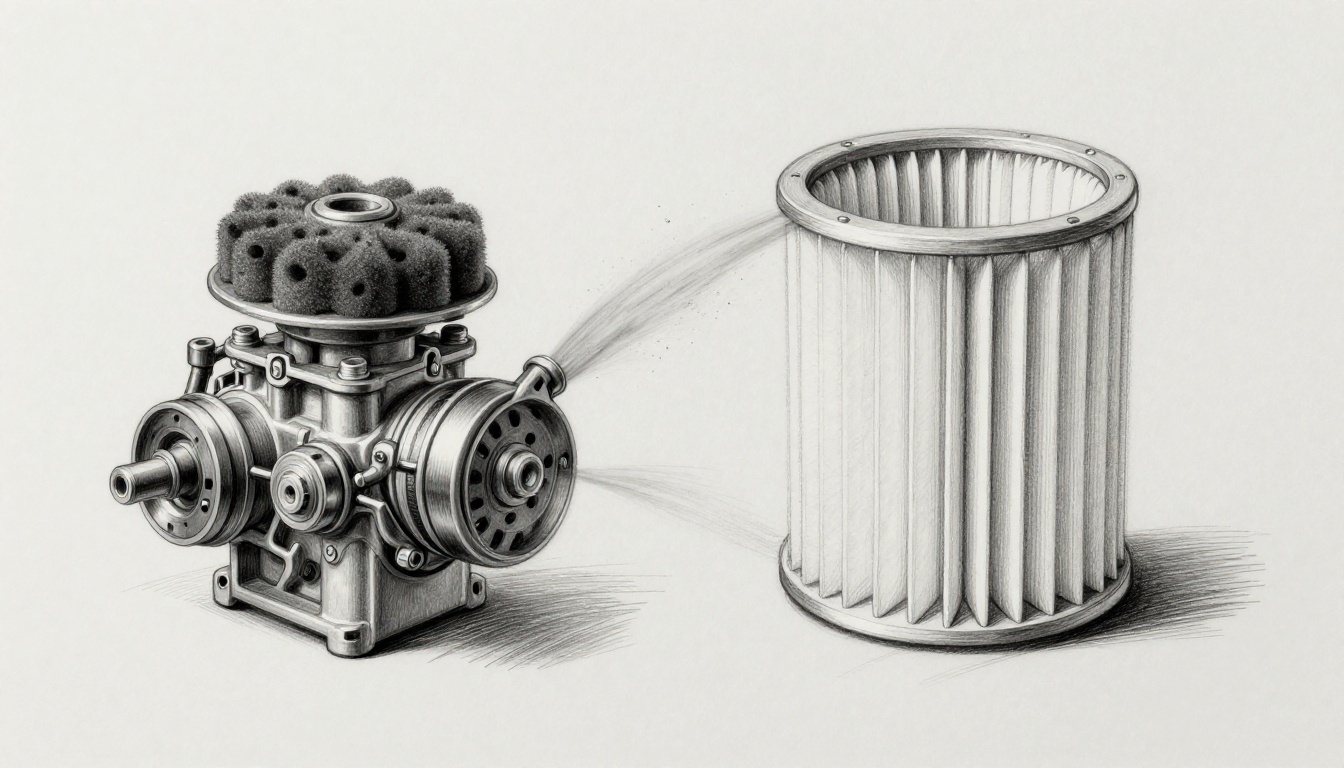
Picture this. Your truck hesitates on the highway. Or your lawnmower coughs and quits mid-mow. These moments frustrate anyone who relies on small engines. Engine choking happens when dirt-clogged air filters restrict airflow. This starves the engine of oxygen. It messes up the fuel mix. Power drops. Damage builds over time.
Foam and paper air filters handle this job differently. Foam ones suit dirty conditions like off-road trails. Paper versions fit daily drivers and mowers best. Each needs specific care to work right. Wrong servicing lets dirt sneak past. Your engine suffers.
This guide breaks it down. You’ll learn the differences. Follow step-by-step servicing for both. Spot trouble signs early. And get tips to keep air flowing free. Service your filter the right way. Your engine stays strong and responsive.
Foam vs Paper Air Filters: Which One Fits Your Engine Best
Foam filters shine in tough spots. They use oiled synthetic foam to grab dirt. Paper filters rely on pleats to trap particles. Choose based on your ride and roads.
Both prevent choking by keeping air clean. A clogged filter starves the engine. Think of foam like a sponge that squeezes clean. Paper acts more like a coffee filter. It catches fine bits but discards when full.
Here’s a quick comparison:
| Feature | Foam Filters | Paper Filters |
|---|---|---|
| Best For | Dirt bikes, ATVs, generators | Cars, trucks, lawnmowers |
| Maintenance | Clean and re-oil regularly | Inspect and replace |
| Lifespan | 50+ uses with care | 10,000-15,000 miles or yearly |
| Pros | Reusable, high flow when serviced | Cheap, no mess, fine dust capture |
| Cons | Needs time and oil | Disposable, less flow over time |
Pick foam for dusty trails because it holds up. Go paper for street use. It saves hassle. Mismatch them to your setup. Choking follows.
The Reusable Power of Foam Filters
Foam wraps a filter frame in pre-oiled layers. Dirt sticks while air rushes through. Riders love them on dirt bikes or ATVs. Generators in workshops benefit too.
Proper service stretches life long. One filter lasts 50 rides or more. Brands like Uni or K&N offer reliable options. Skip oiling. Filtration fails. Overdo it. Airflow blocks.
In contrast, foam beats paper in dirt. It flexes without tearing. Service keeps efficiency high. Your engine breathes easy.
Paper Filters: Simple and Reliable for Everyday Use
Paper filters fold into pleats for max surface. They snag tiny dust in cars or mowers. Stock setups use them most.
Replace every 10,000 to 15,000 miles. Or once a year. Beginners pick them first. No cleaning mess. They hit the trash when dirty.
Yet they waste space in landfills. Flow drops as dirt builds. Still, for clean roads, paper works fine. It prevents choking without fuss.
Step-by-Step: Servicing a Foam Air Filter Without the Hassle
Foam needs regular cleaning. Do it after every dusty ride. Or every 10 hours. This restores nearly full airflow. Choking stays away. The process takes 30 minutes.
Work safe. Turn off the engine. Let it cool. Pick a clean spot.
- Remove the filter. Use a screwdriver for clips.
- Shake loose dirt over trash.
- Spray filter cleaner. Follow bottle directions. Avoid dish soap. It harms foam.
- Rinse with low-pressure water. Go from clean side out.
- Squeeze gently. Do not twist.
- Air dry completely. Or use low fan heat. Wet foam ruins engines.
- Oil evenly. Squeeze from bottle. Cover all foam.
- Reinstall snug.
Done right, it glows under blacklight if UV oil. Benefits show in smooth power.
Tools and Prep for Easy Foam Filter Cleaning
Gather basics first. You’ll need filter cleaner, foam oil, compressed air, gloves, and plastic bags. Screwdriver opens the box.
Set up outdoors. Cover the work area. Disconnect battery if sparks worry you. Safety prevents slips.
Prep saves time. Soak stubborn dirt with cleaner first. Then rinse flows easy.
Re-Oiling Tricks to Maximize Airflow
Oil matters most. Use red or blue filter oil only. Petroleum clogs pores.
Apply to clean side. Flip. Do the dirty side. Squeeze bottle in bursts. Let soak one minute.
Press out excess between paper towels. Foam stays tacky, not dripping. Test airflow. It should pass freely. This step boosts power. Choking drops.
How to Handle Paper Air Filters: Inspect, Replace, Repeat
Paper skips cleaning. Inspect rules. Replace keeps air steady.
Locate the box under hood or side. Open clips or screws. Pull old filter.
Check for dirt. Shine light through. If little passes, swap it. Orient new one by arrow. Push clips firm.
Recycle paper if local rules allow. Trash otherwise. Check monthly. Follow manual for miles.
Fresh paper mixes air-fuel right. Power stays strong.
Signs Your Paper Filter Needs Swapping Now
Look close. Gray or black means full. Tears let dirt in. Oil spots signal blow-by.
Feel sluggish accel. Hear backfires. Smell rich fuel. These tie to choking.
Hold to light. Dark blocks mean replace now. Act fast. Save your engine.
Spot Engine Choking Early and Keep It from Happening
Catch symptoms quick. Hard starts signal trouble. Power fades uphill. Backfires pop. Fuel use climbs. Check engine light blinks.
Clogged filters cause most. Air shortens mix. Lean burn hurts parts.
Prevent with routine. Check monthly. Log dates. Match foam to dirt. Paper to pavement.
Upgrade to dual-stage for mods. High-flow helps tuned engines. You gain MPG. Engines last longer. Repairs drop.
Don’t let a cheap filter cost big fixes. Stay ahead.
Regular care pays off. Choose your type wise. Service on schedule. Engines run smooth.
Grab tools this weekend. Check that filter. Tweak as needed. Your rides improve fast.
What filter do you run? Share below. Smooth power awaits.