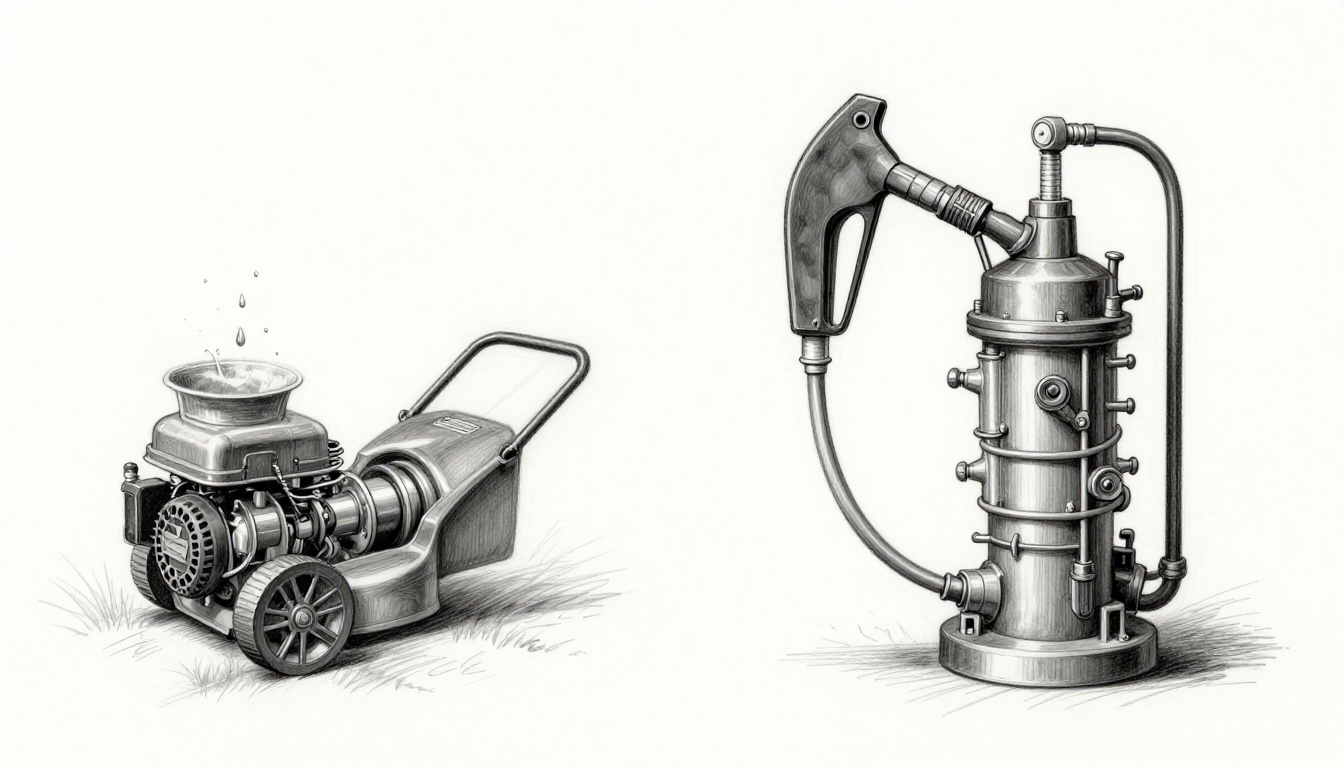
Picture this. You’re in the yard on a sunny afternoon. Your trusty lawn mower sputters and dies. Smoke rises from the engine. You peek inside and find dry, scorched parts. Poor lubrication caused it all.
Lubrication keeps engines alive. It reduces friction between moving parts. That prevents wear and overheating. Without it, metal grinds on metal. Heat builds fast. Your equipment fails early.
Two main systems handle this job. Splash lubrication offers a simple, low-cost fix. It suits small engines. Pressure-fed systems push oil with force. They work in bigger, faster machines. This guide breaks them down side by side. You’ll see how each works, their strengths, and when to choose one. By the end, you’ll pick the right setup for your needs.
What Is Splash Lubrication and How Does It Work?
Splash lubrication keeps things basic. The crankshaft dips into an oil reservoir at the bottom of the engine. As it spins, the crank’s throws fling oil upward. Droplets splash onto bearings, cylinder walls, and other parts. Oil then drains back to the sump.
Think of it like a kid jumping in a puddle. Water flies everywhere from the splash. No pumps or pipes needed. That’s the appeal for small engines.
You’ll find this system in lawn mowers, chainsaws, and small four-stroke motors. It shines in low-speed jobs. The setup stays simple. Fewer parts mean less to break.
Crankshaft throws scoop oil on each rotation. Big ends on the rods get coated first. Some oil reaches pistons and cams. Levels self-regulate because excess drains back.
However, coverage stays uneven. High speeds cause oil to foam. That cuts effectiveness.
Pros include low cost and easy builds. It needs few parts. Self-regulating levels help too. Maintenance stays straightforward.
Cons hit at higher demands. Uneven oiling leaves spots dry. Foaming hurts at fast RPMs. Power limits follow because of that.
Pros and Cons of Splash Lubrication at a Glance
Splash works great for light duty. Beginners love its simplicity.
Here’s a quick view:
| Aspect | Pros | Cons |
|---|---|---|
| Cost | Cheap to build and fix | Higher wear over time |
| Complexity | Few moving parts | Uneven coverage |
| Performance | Reliable under 3,000 RPM | Foams at high speeds |
| Maintenance | Check level, done | Risk of contamination buildup |
It fits yard tools perfectly. But skip it for cars. Dry spots lead to knocks and heat.
Pressure-Fed Systems Explained: Oil Under Pressure
Pressure-fed systems step it up. An oil pump pulls from the sump. It forces oil through narrow passages. Bearings, pistons, and cams get a steady supply.
Imagine your home plumbing. Water flows on demand from pipes. No waiting for splashes. Oil reaches every spot under pressure.
Cars, motorcycles, and large engines use this. It handles high speeds and loads. Components include the pump, filter, galleries, and relief valve. The valve prevents over-pressure.
Oil cools parts too. It carries away heat and debris. That’s key for long life.
A garden hose beats bucket splashing here. Steady stream versus random drops.
Pros cover even distribution. Cooling excels. It removes gunk as a bonus.
Cons mean more complexity. Pumps wear out. Clean oil matters a lot.
Main Parts and How They Team Up
Pumps come as gear or rotor types. Gear pumps use meshing teeth. Rotor ones spin an inner lobe.
Oil starts at the pickup tube in the sump. Pump pressurizes it. Flow goes to the filter next. Clean oil enters galleries, long drilled passages.
From there, oil hits main bearings first. Holes in bearings feed rods and pistons. Camshaft gets its share. Excess returns or sprays for cooling.
Pressure gauges let you monitor. Normal reads 30-60 PSI at speed.
Steps in flow: sump to pump, filter, passages, parts, back to sump.
Advantages That Make It Worth the Extra Setup
Pressure-fed beats splash everywhere. Oil hits bearings directly. No dry starts.
It manages heat better. High RPMs pose no issue. Engine life stretches longer.
Debris flushes out. Self-cleaning keeps things fresh.
Compared to splash, you get reliable power. Worth it for daily use.
Splash Lubrication vs. Pressure-Fed: Clear Comparison
Time to stack them up. Both lubricate. But needs differ.
Splash suits budgets. Pressure demands investment.
Here’s a side-by-side:
| Factor | Splash Lubrication | Pressure-Fed Systems |
|---|---|---|
| Cost | Low upfront and repairs | Higher due to pump and parts |
| Complexity | Simple, no pump | More parts, needs monitoring |
| RPM Limit | Best under 3,600 | Handles 6,000+ easily |
| Power Handling | Small engines, under 5 HP | High-output motors |
| Maintenance | Oil checks only | Filters, pump checks |
| Applications | Mowers, saws | Cars, bikes, generators |
Splash caps at low speeds. Above that, foaming kills it. Pressure thrives there. Fuel efficiency dips less with even oiling.
Briggs & Stratton mowers use splash. Chevy engines go pressure.
Which wins? It depends on your engine. Hobbyists save with splash. Drivers need pressure.
When to Pick Splash Over Pressure-Fed
Go splash for tiny motors. Think under 5 HP. Intermittent runs fit best.
Portable tools love it. Cost savings add up. DIY fixes stay easy.
If you store gear long-term, splash forgives neglect more.
Scenarios Where Pressure-Fed Shines Brightest
Vehicles demand it. High-rev bikes too. Continuous work seals the deal.
Safety counts in tough spots. Overheating risks drop. Reliability soars.
Quick Tips to Keep Any System Running Strong
Maintenance makes or breaks both. Start with daily checks.
- Check oil levels weekly. Top off as needed.
- Use the right viscosity. SAE 30 works for most small engines.
- Clean or swap filters in pressure systems monthly.
- Spot leaks early. Wipe and watch.
- Warm up before heavy loads. Cold oil doesn’t flow well.
Watch for signs. Low pressure lights warn on cars. Knocking means trouble.
Avoid overfill. It foams splash systems. Change oil seasonally.
Inspect now. Your engine thanks you.
Both systems last with care. Pick based on use, then maintain.
Conclusion
Splash lubrication fits simple, low-power engines. It keeps costs down for mowers and saws. Pressure-fed rules high-demand jobs. Steady oil flow boosts reliability in cars and bikes.
You now know the differences. Match the system to your setup. Simplicity or power? Your call.
Check your gear today. What’s your engine type? Share in comments. Happy wrenching.
(Word count: 1,478)