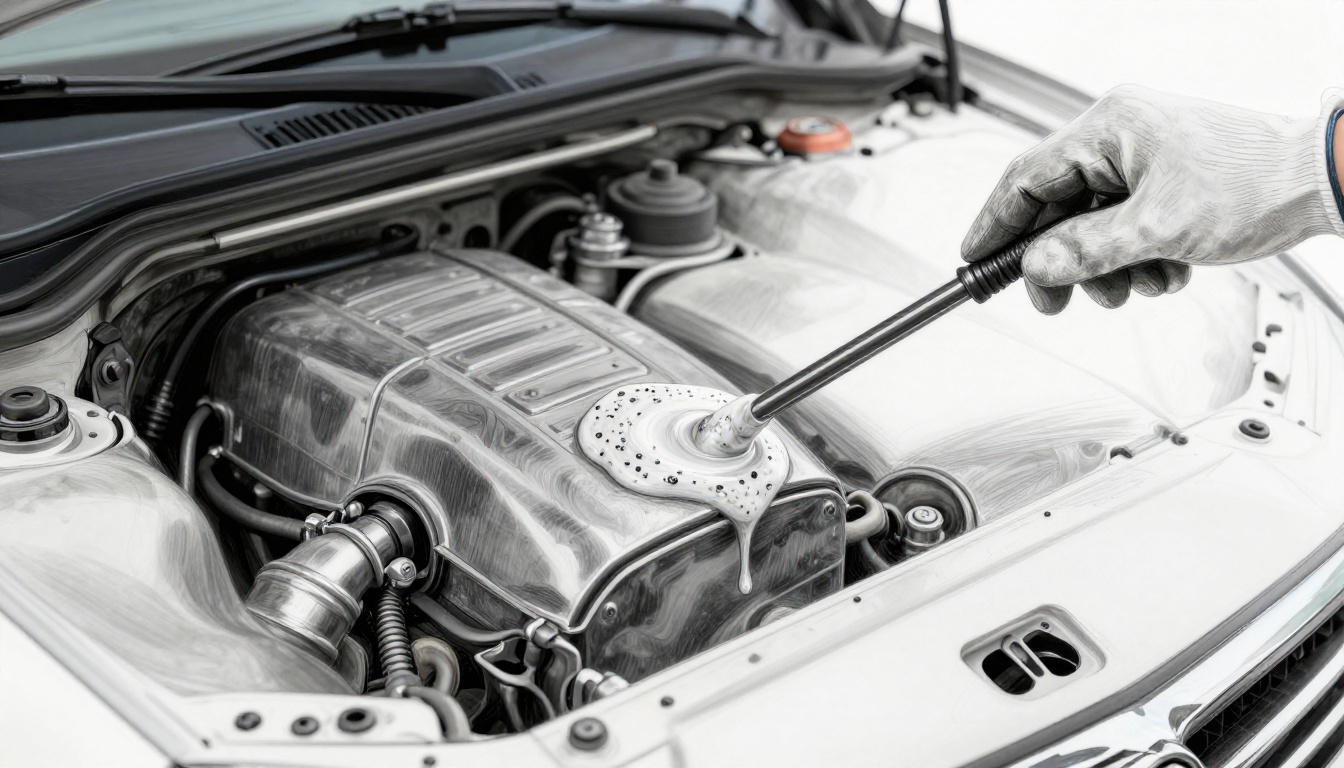
Picture this. You pop the hood of your trusty sedan after a routine drive. The dipstick comes out covered in a weird, frothy mess that looks like a failed milkshake experiment. Panic sets in because you know milky oil spells trouble. Or maybe you spot tiny sparkles under the light, like metallic glitter in the oil. These signs scream engine health issues.
You’ve probably skipped oil checks before. But ignoring them leads to breakdowns, towing bills, or worse, a full engine swap that costs thousands. Good news? Spotting milky or metallic oil takes seconds during weekly checks. You catch problems early and fix them cheap.
This guide walks you through identification, causes, risks, fixes, and prevention. You’ll learn exact steps for your dipstick exam. Plus, real dangers and pro tips to keep oil clean. Act now. Your engine depends on it.
Spot Milky Oil Before Your Engine Suffers
Routine oil checks save engines. Park on level ground. Let the motor cool for safety. Pull the dipstick, wipe it clean with a rag, slide it back in fully, then pull it out again. Fresh oil shines amber and feels slick. Milky oil looks off, like pale tan cream or thick chocolate sludge.
Cold weather hides the mix better. Emulsion stays smooth then. Heat it up, and watery separation appears. Always check the oil filler cap too. Creamy gunk inside confirms the issue. Sniff for sweet coolant odor mixed with oil’s sharpness.
Companion signs include white exhaust smoke, dropping coolant levels, or bubbles in the reservoir. These point to leaks. Do this check weekly. It beats surprise repairs.
Follow these four steps for accuracy:
- Engine cold and level.
- Wipe, reinsert, pull dipstick.
- Inspect color, texture, cap.
- Note smells or foam.
Early detection stops big damage.
Key Visual Signs on Your Dipstick
Light matters. Use garage lights or sunlight. Normal oil flows smooth and golden. Milky starts pale, like weak coffee with milk. Worse cases turn frothy brown, smooth yet thick.
Rub a drop. It emulsifies uniform, not oily slick. Fresh contamination shows recent. Old mixes separate into layers. Compare to last change’s sample if you saved it. Clean rag avoids false reads.
This hue means coolant intrusion. Oil loses power fast. Check now.
Texture, Smell, and Quick Touch Tests
Finger test works best. Dab oil on your thumb and forefinger. Rub. Normal glides silent. Milky feels gritty or pudding-thick from water content. Froth collapses slow.
Smell hits next. Sweet syrup over oil’s bite signals coolant. Cap often shows whipped cream rings or bubbles. Wear gloves if you hate mess. Still, touch confirms.
Urgency builds here. Water kills lubrication. Bearings spin dry soon. Act before seizure hits.
Why Milky Oil Means Coolant Is Invading Your Motor
Coolant and oil don’t mix. Milky oil proves they do. Most times, a blown head gasket lets hot coolant seep in. Overheating or age cracks it open. Other issues include warped intake manifolds or bad water pump seals.
Risks stack quick. Coolant thins oil film. Bearings wash out. Sludge clogs paths. Engine overheats more, speeds wear. Stop driving. Hydrolock bends rods.
Severity varies. Tiny leak? Cheap gasket swap. Major? Engine rebuild looms. Diesels show it less because of higher pressures, but gas engines flash it bright.
- Common causes: Head gasket failure, cracked heads, gasket leaks.
- Key risks: Lost lubrication, clogs, seizure, $3,000-$12,000 fixes in 2026.
Park it. Diagnose fast.
Top Causes Behind the Milky Mess
Overheat first. It warps gaskets. Age follows. Rubber hardens, cracks. Freezing coolant expands, splits blocks. Intake gaskets fail on older rides.
Oil coolers leak in some trucks. Check your model. High-mileage engines suffer most. Heat cycles weaken seals.
Fix roots. Don’t patch symptoms.
Real Dangers to Your Engine’s Longevity
No oil film means metal grinds metal. Wear explodes. Clogs starve parts. Overheat warps more.
Ignore it? Bearings fail first. Then pistons score. Costs hit $3,000 for gaskets, up to $12,000 for rebuilds today. Early catch drops that to hundreds.
Drive on? Total loss likely.
Detect Metallic Oil with a Simple Shine Check
Metallic oil sparkles. Particles catch light like fine glitter. Wipe dipstick clean. Tilt under lamp. Silver flecks, gold bits, or dull gray specks appear.
Rub between fingers. Grit like baby powder signals metal. Drain plug test shines best. Warm engine, remove plug into pan. Oil drips with shine. Magnet pulls steel fast.
Filter hides chunks too. At changes, slice it open. Normal dirt lacks magnetic pull or sparkle. This feels like coarse sandpaper.
Step-by-step magnet hunt:
- Warm oil, safe drain.
- Catch drip on pan.
- Swirl magnet in sample.
- Note pull, color, size.
DIY easy. Light angle tricks visibility.
Where and How to Hunt for Sparkly Particles
Start dipstick. Check filler neck walls next. Drain plug catches heavies. Oil pan screens snag big ones if you access.
Oil change time? Cut filter lengthwise. Look inside pleats. Angle flashlight low. Particles glow.
Patience pays. Small dust hides first.
What Metallic Shavings Say About Wearing Parts
Shavings tell tales. Steel flecks mean cam or crank bearings die. Copper or brass from bushings, clutch. Aluminum dust from pistons scoring walls.
Fine powder? Early wear. Flakes? Advanced. Chunks scream stop now. Noises join: rod knock, low pressure, blue smoke.
Causes tie to neglect. Starved oil, bad gas, heat. Trucks chew bearings fast under tow. Sedans piston-score from rings.
Oil analysis kits pinpoint metals cheap. Send sample, get report.
Common Sources of Metal in Your Oil
Bearings starve first. Oil lacks. Piston rings scrape walls. Gears chip under load. Turbos shed blades. Valves lash loose.
Overlook changes, it snowballs.
How Much Damage Is Already Done
Powder means monitor. Change oil, recheck. Flakes demand teardown. Magnet sticks heavy? Bearings gone.
Chunks over dime size? Failure near. Power drops confirm. Scope inside soon.
Fix It Fast: Steps to Handle Bad Oil Now
Park now. No drive. Top low oil only. Drain old stuff fast. Flush with cheap oil, run idle, drain again.
Pro diag next. Pressure test for milky. Leakdown or borescope for both. Compression checks gaskets. Teardown scopes metal.
DIY limits to flush. Pros charge $150 diag, $2,000 gaskets, $6,000 rebuilds in 2026. Junk if over 200k miles.
Warranty? Claim it. Insurance covers sudden failures sometimes.
DIY First Aid You Can Do Today
Buy bulk oil cheap. Drain, refill, idle 10 minutes, repeat. New filter seals it. Recheck levels daily.
Diag pro still. Self-fix misses roots.
When to Call in the Experts and What to Expect
White smoke, knocks, low pressure? Tow it. Shops run leakdown, scopes, pressures.
Timeline one to seven days. Gaskets quick. Rebuilds longer. Budget ahead.
Prevent Oil Problems and Keep Your Engine Running Smooth
Change oil every 5,000 miles or manual says. Match spec exact. Fix coolant drips same day. Warm idle before revs.
Quality filters trap junk. Check pressure gauge weekly. Flush coolant yearly. Skip bargain parts.
Monitor temps, levels. Habits build 200k miles. Dipstick ritual fits easy.
Spot milky oil weekly. It flags coolant leaks. Metallic means wear starts. Simple checks dodge disasters.
You hold power now. Save thousands with vigilance. Caught early, most fixes stay under $2,000.
Share your dipstick story below. What did you find? Pass this to a friend. Subscribe for more engine tips. Drive safe.