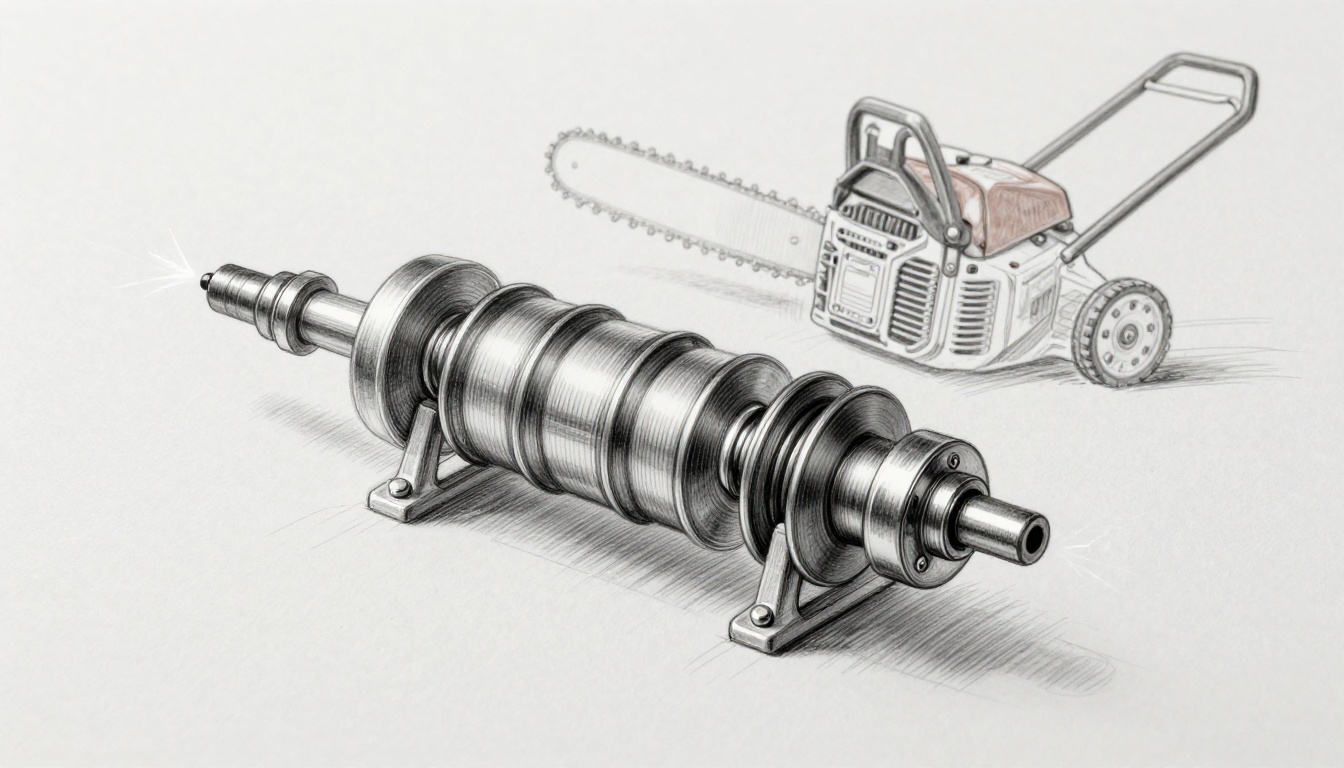
Ever yanked the starter cord on your lawnmower or chainsaw? You hear that satisfying pop and see a spark jump across the plug, yet there’s no battery in sight. How does your engine create electricity without a battery?
That’s the magic of the magneto, a simple yet brilliant device that turns your engine’s motion into the power needed for ignition. It uses basic physics to generate high-voltage sparks right when you need them. No wires to a car battery, no fuss with chargers; it just works.
You find these in small engines everywhere: aircraft that can’t afford failures, boats out on the water, and power tools you grab for yard work. They’re tough and reliable because they generate their own electricity on the fly. So, they keep sparking even in rough conditions.
But how does it really work? In this post, we’ll break down the science of the magneto. First, the basics of how it fits into your engine. Then, the electromagnetism that makes your engine create electricity without a battery. Next, the key parts like the flywheel and coils. After that, the step-by-step spark generation process. Finally, real-world perks for maintenance and safety.
Once you grasp this, you’ll handle DIY fixes with confidence. You’ll also gain a fresh appreciation for clever tech that powers everyday machines. Let’s dive into the basics next.
What Is a Magneto and Why Skip the Battery?
Picture this: you crank a handle on an old-time generator, and lights flicker on without plugs or cords. A magneto ignition system works the same way in your engine. It grabs power straight from the crankshaft’s spin using permanent magnets. No battery required. Instead, it creates fresh electricity each time the flywheel turns.
Engineers love this setup because batteries fail in tough spots. They add extra weight too. Magnetos stay light and simple. You skip chargers and cables altogether. However, they need the engine to spin fast enough first. That’s the trade-off.
Back in the early 1900s, inventors fitted magnetos on aircraft. Pilots needed reliable starts high in the sky. Batteries often froze or drained back then. So, magnetos won out for their dependability. Today, the magneto powers many small engines. You’ll see them on lawnmowers, outboard motors, motorcycles, and small planes. They resist vibration better than batteries. In short, they just keep going.
But how do they stack up against battery systems? Let’s compare next.
Key Differences from Battery Ignition Systems
Batteries store chemical energy. You must recharge them often. Magnetos generate electricity mechanically with each engine cycle. They pull power from the flywheel’s motion alone.
Batteries drain if you leave them sitting. Corrosion eats their terminals too. Magnetos avoid those issues. They boast rugged builds for rough use. No alternator needed for recharges either. Magnetos stay self-sufficient.
Here’s a quick side-by-side look:
| Feature | Battery Ignition System | Magneto Ignition System |
|---|---|---|
| Energy Source | Stored chemical energy | Mechanical motion from flywheel |
| Recharge Needs | Alternator or external charger | None, generates on demand |
| Common Issues | Drains, corrosion, dead starts | Needs initial spin to build voltage |
| Durability | Sensitive to vibration and cold | Rugged, vibration-resistant |
| Maintenance | Check fluid, clean terminals | Minimal, inspect coils occasionally |
This table shows why pilots and mechanics pick magnetos for critical jobs. Batteries work fine in cars. Yet, for remote or high-stakes engines, magnetos shine. Imagine a visual diagram here: one side shows a battery hooked to coils; the other, a spinning flywheel magnet zipping past wires. It drives the point home.
Where You’ll Find Magnetos in Action Today
Start your chainsaw on a remote trail. That sharp spark comes from a magneto. No battery to lug around. Pull-start lawnmowers rely on them too. You yank the cord, and the flywheel spins up power instantly.
Dirt bikes tear through mud with magneto ignition. Riders forget about dead batteries mid-ride. Ultralight aircraft soar light thanks to these systems. Pilots add dual magnetos for backup. If one fails, the other keeps the engine firing.
Portable generators hum at campsites using magnetos. They start easy without heavy batteries. Outboard motors on boats push through waves reliably. Vibration would kill a battery fast.
Consider this story: a farmer’s old mower sat all winter. Spring came, one pull, and it roared. The magneto delivered. Batteries? They’d be toast from the cold.
These spots suit magnetos because they’re lightweight and charge-free. No low-battery warnings interrupt your day. They tie right back to skipping batteries for pure simplicity. Next, see how the parts make sparks fly.
The Electromagnetism Secret: Motion Turns into Power
Your engine’s magneto generates electricity without a battery because of one key principle from physics: electromagnetism. Motion creates power. Specifically, when a magnetic field changes near a wire coil, it induces voltage. This sparks the ignition. You pull the cord, the flywheel spins, and electricity surges. No stored power needed. Let’s unpack how this works step by step.
Faraday’s Law Explained with Real-Life Examples
Faraday’s law states that a changing magnetic flux through a coil generates voltage. In simple terms, move a magnet near a wire loop, and current flows. The faster the change, the stronger the voltage. Think of it as nature’s way to turn motion into electricity.
Ever used a bike dynamo? You pedal, and the wheel rubs a magnet past coils. Lights glow without batteries. Or shake a flashlight; internal magnets swing through coils to charge a capacitor. These gadgets show Faraday’s law in action. Your magneto does the same. Permanent magnets on the flywheel sweep past coils as the engine turns. This rapid flux change spikes the voltage high enough for a spark.
Metal detectors beep over coins because the coin distorts the magnetic field. That shift induces current in the search coil. MRI machines hum with strong fields flipping to image your body. Home generators crank by hand; magnets rotate inside coils for outlet power. All rely on flux changes.
In the magneto, flywheel magnets create a steady field at first. Rotation makes it change fast. Coils “feel” this shift and produce electricity. How quick does it happen? In milliseconds per engine cycle. Ever wonder why your chainsaw sparks on the first pull? Faraday’s law delivers.
Lenz’s law adds a twist. It says the induced current opposes the flux change. This resistance builds energy efficiently. Picture brakes on a bike dynamo; they slow the wheel to maximize power output. So, the magneto fights the motion just enough to generate strong sparks.

Magnetic field lines shift as the flywheel magnet passes the coil, inducing voltage.
This explains how your magneto generates electricity purely from spin. Next, see why magnets and coils pair so well.
Why Permanent Magnets and Coils Are the Dynamic Duo
Permanent magnets supply a constant magnetic field without any input power. You don’t need electricity to energize them. Coils, made of wound wire, capture the induced current as the field changes. Together, they form a self-powered team.
Contrast this with electromagnets. Those require battery juice to create their field. If power fails, so does the spark. Permanent magnets avoid that hassle. They stay strong for years in engines.
Inside the magneto, the primary coil handles low voltage first. Flywheel motion induces a small current here. This low-voltage pulse then energizes a secondary coil through a transformer effect. Turns ratio steps it up: hundreds of secondary windings versus few primary ones. Result? Thousands of volts for the spark plug.
Engineers wind these coils tight around an iron core. It boosts flux concentration. As magnets approach, voltage rises; they retreat, it collapses. That collapse delivers the sharp pulse.
Simple circuit flow: flywheel spins magnets by coils. Primary builds current. It interrupts via a breaker point or solid-state switch. Magnetic field snaps off. Secondary coil multiplies voltage. Spark jumps the gap.
Advantages stack up:
- Reliable start: No dead battery worries.
- Lightweight design: Fewer parts mean less weight.
- Vibration proof: Solid magnets endure rough rides.
Your lawnmower’s magneto thrives because this duo converts mechanical energy directly. No middleman. In short, permanent magnets provide the field; coils grab the power. Perfect for battery-free operation.
Inside the Magneto: The Parts That Make Sparks Fly
You pull the cord, and sparks fly. But what powers that? The magneto components inside do the heavy lifting. Think of your magneto like a bicycle: the flywheel acts as the big rear wheel storing spin energy. Magnets bolt to it like sturdy spokes. Coils stand fixed like the frame, grabbing power as magnets zip by. Breaker points work like hand brakes, timing the release. A capacitor smooths things out, much like shock absorbers.
These parts team up without batteries. They mount right on the engine block or crankshaft end. Single magnetos suit simple tools like lawnmowers. Dual setups, common in planes, add backup so one failure doesn’t ground you. Most include a stator plate holding coils stationary. Some multi-cylinder engines add a distributor to route sparks.
Here are the core magneto components and their jobs:
- Flywheel with magnets: Stores engine spin; permanent magnets create changing fields as they rotate.
- Primary coil: Catches low voltage from magnet motion to build a magnetic field.
- Secondary coil: Steps up voltage through transformer action for spark plug power.
- Breaker points or solid-state switch: Opens the circuit at the right moment to collapse the field.
- Capacitor: Absorbs extra energy to stop arcing and sharpen the spark.
- Distributor (if present): Sends high voltage to the right cylinder in multi-cylinder engines.
This setup keeps everything compact and reliable. Engineers balance the flywheel carefully because wobbles kill performance. Next, zoom in on how the flywheel captures power.
Flywheel and Magnets: Capturing Engine Power
The flywheel bolts directly to your engine’s crankshaft. It stores rotational energy from each pull or crank. Heavy rims keep momentum steady even if the engine coughs. So, it smooths out power delivery.
Magnets embed in the flywheel rim. Older ones used alnico; now rare-earth magnets like neodymium pack more punch in smaller sizes. They spin past fixed coils at high speed. This motion creates the changing magnetic field needed for electricity.
Balance matters a lot. An off-kilter flywheel vibrates the whole engine. It wears bearings fast. Factories machine them precise, often under 0.01 inches runout. You feel it in smooth operation.
In short, the flywheel grabs crankshaft power. Magnets make it electrical. Without them, no spark happens. Your chainsaw owes its bite to this duo.
Coils and Transformer Action: From Low to High Voltage
Coils sit on a stator plate, bolted firm inside the magneto housing. The primary coil, with few wire turns, catches initial low voltage as magnets pass. It builds a strong magnetic field around an iron core.
Then the magic ramps up. The primary links to the secondary coil with a 100:1 turns ratio, often 100 to 300 turns more. When the primary field collapses, it induces 20,000 to 40,000 volts in the secondary. No external power needed.
This transformer action multiplies voltage fast. Primary might hit 200 volts; secondary surges to spark levels. Iron core funnels flux efficiently. Coils wind tight to minimize loss.
Result? High-voltage pulse races to the plug. It jumps the gap, igniting fuel. Modern epoxy seals protect from oil and heat. So, coils turn weak motion into ignition fire.
Breaker Points, Capacitor, and Timing Magic
Breaker points mount near the flywheel. A cam lobe opens them at precise crankshaft angles. This interrupts the primary circuit. The magnetic field collapses instantly, spiking secondary voltage.
A capacitor connects across the points. It soaks up surge energy. Arcing stays minimal because it discharges quick. Points last longer too. Clean them with solvent; gap sets to 0.015 inches usually.
Modern magnetos swap points for CDI transistors. Capacitive discharge ignition stores energy in a capacitor first. Transistors switch faster, no wear. Sparks sharpen for better starts.
Timing advances with RPM. A spring-loaded advance plate shifts cam position. At idle, spark fires early; high speed, it delays slightly. This matches combustion needs. Dual magnetos sync both sides for even power. In all, these parts nail the spark moment.
From Crank to Combustion: How the Spark Happens Step by Step
You crank the engine, and seconds later, fuel ignites with a bang. How does the magneto create electricity so fast? It follows a precise sequence powered by motion alone. The crankshaft turns the flywheel. Magnets induce current in the primary coil. Breaker points snap open to collapse the field. High voltage surges to the secondary coil. Finally, it arcs across the spark plug gap to light the fuel-air mix. Timing keeps it all synced to the piston position. Think of it like loading a slingshot: pull back slow, release quick for maximum snap. Let’s break it down into clear steps.
Step 1: Flywheel Rotation Kicks Off the Magnetic Dance
First, you pull the cord or turn the key. The crankshaft spins the flywheel fast. Permanent magnets on the flywheel rim zip past the primary coil. This motion changes the magnetic field through the coil wires. As a result, it induces a low-voltage alternating current, around 200 volts peak.
Energy builds quickly because the flywheel stores momentum. Coils grab this flux shift thanks to Faraday’s law we covered earlier. However, the current stays low at first. It magnetizes the iron core gently. Meanwhile, the engine reaches the right RPM for peak output. No battery jump-starts this; pure spin does the job.
Picture magnets dancing past coils like kids waving flags. Each pass pumps energy in. If the flywheel wobbles, voltage drops. Check balance during maintenance to avoid weak starts.
Step 2: Charge Buildup and Sudden Release
Now the primary current flows steady. It strengthens the magnetic field around the core. Breaker points stay closed, letting charge pile up. Then, at the perfect crankshaft angle, a cam lobe forces the points open. The circuit breaks instantly.
This collapse snaps the magnetic field back like a slingshot release. High voltage spikes in the primary coil. A capacitor across the points absorbs extra energy. It prevents arcing and sharpens the pulse. Timing matters here; too early or late, and combustion suffers.
For example, solid-state switches in modern magnetos react faster than old points. They last longer too. Still, dirty points cause weak sparks. Clean them or replace for reliable ignition. In short, this release turns stored energy into power.
Step 3: High-Voltage Path to the Spark Plug
The collapsing field induces massive voltage in the secondary coil. Hundreds more wire turns boost it to 20,000 volts or higher. Current races through the high-tension wire to the spark plug.
At the plug, electrodes create a small gap. Voltage jumps it as a bright blue arc. This heat ignites the compressed fuel-air mix. Boom, combustion pushes the piston. The cycle repeats every crankshaft turn.
In multi-cylinder engines, a distributor routes voltage to the right plug. Advance mechanisms adjust timing with RPM for efficiency. Weak spark? Inspect wires for cracks first. Test coil output with a meter. Your magneto delivers fresh electricity each time, battery-free.
Why Magnetos Win for Reliability and Simple Fixes
Magnetos shine in real-world engines because they dodge battery headaches. You get sparks on demand from pure motion. No dead cells or corroded posts to chase. Plus, fixes stay simple since fewer parts mean less trouble. Mechanics love them for quick jobs. In short, magneto advantages for engines show up in daily use.
Top Reasons Magnetos Beat Batteries Every Time
Reliability tops the list. Batteries die from cold snaps or long storage. Magnetos don’t care; they generate power fresh each crank. Vibration shakes batteries loose. Yet magnetos handle bumps on chainsaws or planes without skipping a beat.
Weight drops too. Skip the heavy battery and brackets. Your outboard motor runs lighter on the boat. Always-ready status means no pre-flight checks for charge. Pull the cord, and it fires.
Here are the standout magneto advantages for engines:
- No battery failures strand you mid-job.
- Vibration-proof builds last through rough rides.
- Lightweight setup boosts portability.
- Self-powered, so always primed for action.
Pilots swear by dual magnetos. One quits? The other keeps you aloft. Farmers crank mowers after winter with one pull. Batteries? They’d sulk in the shed.
The Few Drawbacks and How to Handle Them
No system perfects everything. Magnetos need fast spin to build voltage. Slow pulls fizzle out. Cold mornings challenge them too; oil thickens, slowing the flywheel. They skip accessories like lights or electric start.
Still, workarounds exist. Warm the engine first. Use a primer bulb for fuel. Add a separate alternator for lights if needed. These cons fade against the pros for most users.
Easy Maintenance and DIY Tips to Keep It Running
Keep your magneto humming with basic care. Inspect coils yearly for cracks. Clean dirt with a soft brush. Gap breaker points to 0.015 inches using a feeler gauge.
Test spark easy. Ground the plug to the block; crank and watch for blue arcs. Weak? Check flywheel magnets for chips.
Modern electronic magnetos upgrade the game. CDI units ditch points for transistors. Sparks snap hotter, starts easier in cold. Swap in one during rebuild for less fuss.
You fix most issues in minutes with basic tools. No shop trip needed. This simplicity ties back to the electromagnetism wonder. Motion alone powers it all, reliable as gravity. Your engine thanks you.
Conclusion
Magnetos turn your engine’s spin into sparks through electromagnetism. No battery needed. The flywheel magnets zip past coils, inducing voltage via Faraday’s law. This reliable setup powers lawnmowers, chainsaws, and planes without fail.
You now understand how the magneto creates electricity without a battery. Tinkerers gain confidence for easy fixes like cleaning points or testing sparks. Simplicity rules, so maintenance stays quick and straightforward.
Check your mower’s magneto today. Pull the cord and watch for that blue arc. Share your fixes or stories in the comments below. As solid-state upgrades sharpen sparks even more, this tech keeps evolving.
Next engine pull, thank the magneto.